Spring is a great time to bring hands on science activities into your curriculum. My students love interactive science activities. With the warmer weather approaching, our curriculum focuses on spring science standards. Students are so excited when they can step out of the textbook and interact with science in creative ways. I found some wonderful activities and want to share them with you.
Showing posts with label Burke's Special Kids. Show all posts
Spring Science Ideas
Spring is a great time to bring hands on science activities into your curriculum. My students love interactive science activities. With the warmer weather approaching, our curriculum focuses on spring science standards. Students are so excited when they can step out of the textbook and interact with science in creative ways. I found some wonderful activities and want to share them with you.
5 Practical Ideas to Help YOU Avoid Teacher Burnout!
16 January 2017
/
Burke's Special Kids,
Organization,
Teacher Burnout,
Time-Saving Ideas
/
1 comment
Tips for Communicating Student Progress
16 November 2016
/
Burke's Special Kids,
Classroom Expectations,
communication with parents
/
Leave a Comment
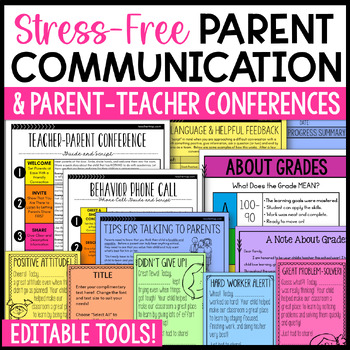
Every teacher knows that effective parent communication is a key to classroom success. Effective progress reporting sets the stage for home support and student achievement.
Read More...
Building Comprehension With Prediction Strategies
25 September 2016
/
Burke's Special Kids,
comprehension,
prediction strategies,
Reading,
think pair share
/
Leave a Comment
Studies on good readers have proven that prediction strategies are one way to deepen reading comprehension. Prediction strategies can be used before and during reading to increase understanding text.
Ideas for Decorating With Anchor Charts
25 July 2016
/
Anchor Charts,
Back to School,
Burke's Special Kids,
Classroom Decor
/
Leave a Comment
Today I'm excited to share ways to use anchor charts to decorate your classroom. So many of us have limited budgets, time and wall space. Creating your classroom environment with your students will lessen stress! More importantly, it will provide engaging and meaningful content to your classroom setting. The students will have ownership and refer back to the charts. I have seen my students look back to the wall where a chart once hung, as they worked on a classroom skill. As you head back to school, use these tips to reduce the stress of classroom decorating.
1. Only Decorate the Background and Border of your Bulletin Boards
Bulletin boards are precious real estate. Use them to your advantage to immerse your students in learning. I love the clean look of this board, prepped and ready for students. (NOTE: All images are clickable and will direct you to the original post/site.)![]() |
| Credit: Life in First Grade |
Ideas for Bulletin Board Materials:
Ideas for backgrounds:- school furnished bulletin board paper on large rolls.
- gift wrap
- interior or exterior house paint
- newspaper comics
- fabric (so many bright colors in solids and prints. Fabrics are a bit more expensive but they last. They are also a great way to bring cohesion to your classroom if you use the same fabric or shades of color for curtains, etc.)
- felt (I purchased felt fabric because it was on sale in the solid color I wanted. It is wonderful. Holds up well and you can use velcro, tacks, or staples to attach to it.)
Ideas for borders:
- ribbon
- netting
- burlap
- premade borders
Premade borders are available online and in stores. Here are some ideas with clickable links to the stores.
![]() |
| Superhero themed classroom |
![]() |
| Lemon and gray double sided border |
![]() |
| Marquee |
![]() |
| Jigsaw: Perfect for cooperation, unity, and diversity |
Add a Banner:
How cute is this banner by Mrs. Ricca's Kindergarten! You can grab her polka dot banners for "welcome, read, write, and word wall" free in her Teacher's Pay Teachers Store! (Click HERE)
2. Tips for Keeping Anchor Charts Evergreen and Decorative
I love this pin from the Pinspired Teacher. She has some terrific anchor chart tips on her blog.
Add longevity:
- Laminate a bare bones copy of your anchor chart (minus the interactive element you do with the students.) Next year erase and reuse the same chart.
- Use post-it notes to add details and interactive pieces.
- Take photos, reduce the size, and use in interactive notebooks.
- Take photos and place them in a binder for easy reference for you and your current students.
![]() |
| Credit:The Pinspired Teacher |
![]() |
| Credit: Upper Elementary Snapshots |
For an easy to follow tutorial on converting anchor charts to worksheets visit Upper Grades Are Awesome.
Add Decoration:
- Cut out clipart or photos to preassemble the framework of your anchor chart.
- Use fun fonts or word art to create headers or bullets for your anchor charts.
- Let students illustrate anchor charts.
- Purchase premade anchor chart accessories on Teachers Pay Teachers. Use the search term "anchor charts." You will find premade anchor charts and accessories such as this literacy set by The Applicious Teacher.
Great tutorial for using word art:
3. Tips for Hanging and Storing Anchor Charts
You might have purchased or made a chart stand out of PVC pipe. If you don't have one, just grab this tip from Fun With Firsties! All you need is a set of command hooks, binder rings, and a tension rod.
Label and store your charts for easy access with this idea from Teaching With a Mountain View.
Well, I hope this helps take off some of the stress as you ready your classroom during back to school planning. Letting the students build the decor through meaningful learning, will not only save you time at the beginning of the year, but will pay off in dividends for your students!
Best wishes for your new school year!
5 Tips for Facilitating Student Created Math Games
![]() |
| Adobe Stock |
After putting my students into teams, I showed them LOTS of examples. I pulled out our Candy Land Board Game, and pulled up Google Images to show tons of examples. We discussed how there was a theme, bright colors, a designated path, etc. This helped when they planned their own games. Although the stickers were going to be used...even if they didn't match their game's theme! It was interesting to note that one of the teams really had a struggle creating a game that had a clear path. I think this reflects their lack of background playing games. It was enlightening for me to see the problem solving and struggle going on even with the simple task of planning their game.
Initially I planned for my students to spiral review several standards within one domain, as they planned, created, and played their math games. Big mistake! This is really a huge undertaking for inexperienced game creators. Even though my second graders are ready for third grade next year, developmentally they could only focus on one standard. Once I narrowed down their focus, and again provided examples of the kinds of questions they could create, they were off and running. A good rule to remember is "simple is best!"
My students planned out the theme, type of game, materials they would need, and any additional notes, prior to starting their game boards. This led to productive talk and kept them focused on the task.
They worked together to plan their game boards on paper or white boards using dry erase markers. Again, this promoted collaboration and engagement.
Finally they worked together to put their masterpieces on paper. I supplied white bulletin board paper which gave them plenty of room to think and create.
I quickly found out it was in my best interest to have individual storage containers for each team as they worked on creating their games this past week. I put out containers and teams choose what worked best for them.
I'm loving these magnetic tins I discovered at the Dollar Tree. They are perfect for holding game pieces. We just put them up on the whiteboard each time we are done!
This was a great end of the year activity for my students. They were highly engaged during the entire process. In addition to delving deeper into the standards, we learned problem solving and team building skills. I hope you found some of these tips useful!
Reading and Responding to Text Through Talk
25 March 2016
/
Anchor Charts,
Burke's Special Kids,
group work,
informational text,
Kagan,
talking,
text discussion,
think pair share
/
2 comments
Are you looking for ways to actively engage your students and build their reading comprehension? Facilitating and encouraging discussions about text is a sure fire solution.
Research proves that kids are more engaged and learn from each other when they are encouraged to discuss text they are reading. I know it is often hard to let go of the reins, but students of all ages are capable of discussing ideas and concepts contained in text.
Building Schema for Success in the Language Arts Classroom
Research has proven that schema, or what a student already knows about the content, is a leading factor for achieving success in the language arts classroom (Marzano, 2004). As teachers, we know that poverty affects many students today. A direct link exists between family income and access to rich academic experiences. How can we help our students bridge this academic barrier? This is a question I am investigating in my language arts classroom.Tips for Using Interactive Notebooks in a Primary Classroom
25 November 2015
/
Burke's Special Kids,
Interactive Notebooks,
Primary Grades,
Reading,
Science
/
Leave a Comment
Using interactive notebooks is an amazing opportunity to use higher order thinking skills and cement your students' learning. I am here to give you several tips to make the experience stress free and meaningful for you and your students!
1. Teach students your expectations for gathering, using, and putting materials away.
When students know your expectations and have a chance to practice procedures with guidance, the stress factor dramatically decreases for you. The first time I exposed my students to note-booking activities this year, I learned this the hard way. Simply explaining the activity leaves too much room for student interpretation when accomplishing the goal. Now I pre-teach everything, step-by-step. This allows me to continue working in small groups when students are responding in their notebooks independently.
Favorite Authors for Teaching Character Traits
I love choosing books for my students which serve as mentor texts for our reading and writing units. This month we have been working with standards related to character traits and how characters change. I am going to highlight several of the authors that have been favorites in my classroom.![]() |
| KB Fonts, Ashley Hughes Graphics |
In Burton's book, the author clearly presents the character traits of the lonely scarecrow and his desire to be friends with the animals that play at the edge of his wheat field. This book is perfect for introducing character traits. The illustrations are gorgeous, and perfect for this time of the year. If you don't have the book in your library it is accessible through YouTube.
Lynne Cherry wrote one of my all time favorite books, The Great Kapok Tree. This book is perfect for introducing point of view, and character change.
Set in the tropical rain-forest, a lone woodsman is intent on chopping down the great kapok tree. He falls asleep under the tree and is visited by the wondrous animals and a child that inhabit the forest. Kids love the different voices the reader can easily use when reading the dialogue presented by the various creatures. The various animals explain to the man the importance of saving the rain forest. Once he awakens, the man has a change of heart and leaves the forest and ax behind.
Another favorite author is Margaret Wild. She wrote Fox, which has a variety of themes and such a depth, it could be appropriate for students of any age. It is a book you can you use for so many areas of reading and writing.
The illustrations and writing are so unique in this book you and your students will be mesmerized! Set against a recent forest fire, magpie with it's burnt wing is rescued by dog. Dog, the optimist, promises to be the lost wing that magpie lost, while magpie can be his eyes. The two eventually become close friends. Fox enters the picture and turns their world upside down. Of course, you will have to read the book to discover what happens!
I used a few folds and cuts to make this easy interactive foldable for the kids to have fun demonstrating their understanding of character traits. They choose one of the main characters from Fox, listed the traits, provided their evidence, and illustrated the character.
A nice anchor chart resource is available as a freebie by A Year of Many Firsts. You can grab it by clicking {Here}.
Powered by Blogger.