How Do You Stay Organized For Next Year

31 May 2015 / Leave a Comment


Is anyone else having trouble staying organized for this school year and next year?  We would love to hear about how YOU stay organized for this year, while trying to think ahead and plan for the upcoming year.


 Here are some of the ways that the Classroom Tested Resources Teachers stay organized:


We would love to hear from you!!  Please use the blank image to share your organizational idea.  Then link up below!


Thanks so much for sharing your ideas and we hope you found some new ones today!
Read More...

Teaching & Practicing Fluency

30 May 2015 / Leave a Comment
Hello everyone! This is Tara Looney from Looney's Literacy. I know this may find a lot of you already on summer vacation so the topic of fluency may be far from where your brain may be.  If that's the case, and you find these tips helpful you can always pin this and come back when you're ready! 


How do you teach fluency?  My first and easiest response was reading aloud and modeling. Yes, this is one way to teach fluency. But another,  very important way to teach fluency is repeated reading.

I want to clarify a few things before I get started. One, there is a difference between teaching and assessing fluency. When you assess fluency you listen to a child read for one minute from a passage they've never seen before. When you teach fluency (I'm talking: fluid & accurate reading) you not only model but you give students the opportunity to practice what fluency sounds like in a text that they already know. Two,  my purpose for reading aloud mentor texts is for them to hear fluent, expressive reading without any interruptions. So on a first read, I don't do any teaching. I may pause and ask rhetorical questions (model comprehension strategies)  but we don't discuss. That's for the 2nd or 3rd read (which is for comprehension strategies that support fluency).

 During my small group instruction time with my primary students,  I always have my students preview the text prior to reading. This time gives them opportunities to look at pictures, think about the story and skim the text for words they may need to work on (which will aid fluency during reading).  With my elementary aged and middle grade students (3-6),  I have them go read it to themselves silently and then come back to the table to read it together. This helps support reading fluently when working together in small group.

If a group is still struggling to read a text fluently without hearing it first I read a page a loud and then have a student read the same page a loud. That way they know what the story sounds like. How many pages I read a loud depends on how quickly the group catches on and begins reading fluently without support.


With that being said, I would like to discuss one way the fourth grade teachers in my building teach fluency that supports an internal drive to be successful and get better. I'm not exactly sure where the strategy originates because it's been several years that one of the fourth grade teacher's brought this strategy back from a conference they had attended. But I still love it! It' s one of those timeless classics in education that may "swing" in and out but never really goes away.

We use Macmillan McGraw-Hill Treasuresand in the past couple of years we've adjusted the program to work for our mission and building goals. We've adopted a 7-8 day ELA schedule (I love, love, love it!). It gives the teacher and the students time to really concentrate and work on different skills , including those they may need to continue to work on from past weeks'.

So what does this have to do with teaching fluency? This...the teachers use the short story before the main story to practice a variety of skills. On day one, the students read the short story to themselves for one minute.  This  "cold read" warms them up for day two and three. The students then work on the vocab. skills for the week. On day two, the students read the short story to themselves again for one minute.  Then as a whole class work on the comprehension skills.   By day three most of them are reading the whole passage to themselves in one minute. Most students really enjoy watching this growth occur over the few days.


 On day one at the beginning of the year, the teachers teachers hand out a blue, yellow and red post-it flags. (These should last for a whole semester, with exception to those "few") The students read the short story to themselves and when the minute timer goes off they mark with the blue sticky marker.  Day two, they will use the yellow marker and on day three they use the red.


You may be  wondering  how to hold them accountable if they are reading to themselves. The beauty of it all is, you don't. You  talk to them about being honest and if they choose not to be they are only cheating themselves. This activity  is not about comparing yourself to others it's about helping yourself get better. You may also want to remind them that fluency is not about how fast you read but how fluid you read. It should sound like you're talking. Let them know this will help them understand the story better also.

I hope this gives you some tips to take back to your classroom!


Read More...

Family Fun and a FREEBIE!!!

29 May 2015 / Leave a Comment


Hooray!!! Summer is almost here!  For most families summer vacation means more time for family fun.  Camping offers opportunities for family fun and creating memories that will last a lifetime.  This post has camping themed ideas and resources that will work for families or classrooms having End of the Year Classroom Camp Outs.


A Camping Spree with Mr. Magee


A Camping Spree with Mr. Magee by Chris Van Dusen is one of my favorite books to share with children.  The delightful illustrations and rhyming words whimsically tell the story of a camping adventure that will capture your little learners' attention.  The story begins with Mr. Magee and his dog, Dee, setting off in their vintage Rambler convertible and canned ham camping trailer to camp in the mountains. Though their camping plans are adjusted after the excitement of an encounter with a bear, the two make the best of their situation and still have a great time.


The Bear Facts:

Addition Fun with Food

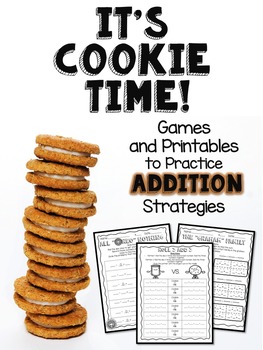
Here is an easy and fun way to practice addition facts for your little learners.  Eating the graham bears when the addition practice is complete makes the activity even more enjoyable.

1.  Give each child a 3-sectioned plate, bear graham crackers, a small dry-erase board, and a marker.  (You can adjust the amount of bears you give each student to address the addition facts for any given lesson or to meet the needs of individual learners.)   Learners put bears in the top sections of the plate.  They use the dry-erase board to write the addends for the corresponding addition fact.

2.  Learners combine the bears in the large section of the plate.  They write the equal sign and sum to complete their equation.


3.  Repeat the procedure with learners making different equations.  When learners have completed the addition activity they get to eat the bears.  Yummy!


S'mores Snack Mix


This simple snack is fun and tasty.  It is a great followup up activity to the Mr. Magee book or can be used as a stand alone activity.  You may mix a big batch or have children count out the items used to make their individual cups of snack mix.


1. The ingredients used in this recipe:


I like to tell children the bears are for the bear in the story, the marshmallows are like the ones the bear loved in the book, and the chocolate is for the rocks in the story.

You may substitute chocolate chips, chocolate covered peanuts or raisins, or candy coated chocolate candy pieces for the chocolate I used.  If your school is a peanut free zone or your child has food allergies, you can adjust your ingredients to comply. 


2.  Put the ingredients in bowls.  Learners follow your directions to count out a given number of each ingredient. (I have found 10 or 12 to work well.)


3.  Put the ingredients together in a bowl or plastic cup.


If you are hosting a camp party you may not want to use this snack as a counting activity.  You can just mix these ingredients together in a larger bowl and serve.


FREEBIE:

Campfire Kids Rock! Count and Clip Cards


Campfire Kids Rock Count and Clip Cards give your little learners an opportunity to practice counting and cardinality skills and address fine motor development in one easy to use activity.  You may use all the cards or select the cards that best meet your learners' needs.  Place the cards and clips in a zippered binder pouch or plastic pencil box for easy storage.  These cards make a great fast finisher activity or portable activity to take on a family camping trip. 


We Love Camping Write the Room


We Love Camping Write the Room gets your little learners up and about the room while learning.  My students love the different "Roam the Room" activities.  They are always eager for an opportunity to use clipboards because they consider using clipboards to be an adult task. I have even had students buy their own clipboards and bring them to class because they enjoy using them so much.  I must admit that I love to watch them using the clipboards, too. They are so cute moving about the room with their clipboards, modeling adults they have seen using clipboards. Watching children enjoy activities I have planned for them is always thrilling to me.

I also like learning activities that get the children moving around and actively engaged in their learning.  "Roam the Room" activities are a great way to incorporate movement into learning activities. Many studies have determined that providing opportunities for movement in the classroom helps learners stay focused and decreases discipline issues.  This makes the school day more enjoyable for students and teachers.

Happy Camping!


Read More...

Fun with Fluency!

28 May 2015 / Leave a Comment
Howdy Friends!  I'm Susan, from First Grade Friendly Froggies!  It's my turn to share how I put FUN into learning!

The most important part of teaching is making sure your students are engaged and having fun!  This becomes especially challenging at the end of the year, when kiddos and teachers are "Summer Dreamin'", like Olaf!  At least that's my opinion! :)

It's just my style in my classroom to make everything a game... because kids LOVE games!

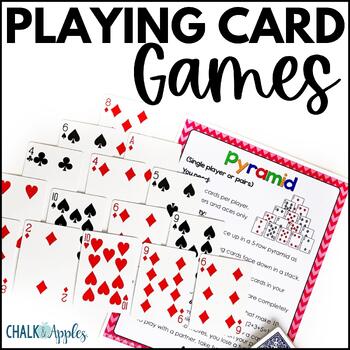
Several years ago,  I started to create "Go Fish" and "Uno" style card games for my students.  Since I've been using these games with my students, I've seen a huge increase in the number of sight words my kiddos know by the end of the year.  When I first started teaching first grade, in 1999 (whew, that was last century :) ), the district required all first graders to learn the first 100 sight words.  So that is what I taught!

After a couple of years, and some confidence in myself as a teacher, I realized I was limiting my kids.  I started expanding the list in my classroom and raising the bar!  My students loved the challenge and soon, I was expecting them to know at least 150 sight words.  Now all of my students are exposed to at least 200, but many surpass this goal.

What does that mean for them?  

Am I stressing them out?

Stressed?  No way!  Proud?  You bet!  What does it mean for them?  More access to books!  I'm sure you have tricks you use in your classroom, and in my classroom the trick is games!

Here is one of my games that focuses on those pesky Nonsense Words!  


I found that my kiddos were stumped at having to read words that didn't make sense!  So, we started practicing.  This is, of course, great phonemic awareness practice and builds confidence and fluency! Now, they read those Dibels and Aimsweb Nonsense words with ease!  


GAME DAY!

 During our last week of school, we celebrate our friendships with "Game Day"!  I bring out all of the games we've learned with throughout the year and we PLAY!  The kids LOVE it!  It's a great year end review and reward for our hard work!  I love listening to the kids while they play! Especially, when they have to "show off" because the games are soooo easy now!   

Here is a FUN freebie for your students!
Have fun learning!
Read More...

Free Word Problems using Money for the Summer

27 May 2015 / Leave a Comment
FREE Summer Word Problem Worksheets
Freebie! Get ready for summer or the end of the year by planning some fun math word problems using money. Here are two free worksheets that use a summer theme to brush up on adding and subtracting money while using problem solving skills.


 Teacher's Take-Out


Read More...

BUILDING FLUENCY WHILE HAVING FUN!

26 May 2015 / Leave a Comment

Playing Games to Build Fluency

For me, it's always about having fun while learning.  I love to incorporate games into EVERYTHING!  WAYYYYY back when, I used to buy all of my games through companies like Lakeshore, but now I make my games so they fit exactly with words and concepts that I'm teaching.  So, in this post, I'm going to share a few games we play to help build fluency!

SPOT THAT WORD!

Our Spot that Word game is an all-time favorite!  It's a fast-paced game that builds fluency without the students ever knowing it!  You start with a deck in the middle of the students (we play with a maximum of 4 students because it can get too loud with more than that).  Each student picks one card.  Then the goal is to find your one match with the middle card before anyone else finds their match.  Every card has ONE match!  Don't ask me how it works... but it does!  Check out a freebie of the game if you are interested.  Click on the picture to see all of my Spot that Word games.


MATH FLUENCY!

We are no longer allowed to have "Math Centers", but I still believe that games help build fluency, so we "fit them in" however we can.  Our board games, I Have, Who Has games, and Scoot are among our favorite classroom games.  

If you've never played I Have, Who Has... you're missing out.  Some teachers do this whole group, but last year we found that students actually like it more during center time as a group of 2-4, so that's how we play it.  Students divvy up cards, turn them all face up, and begin.  As they say their card, they turn it over.  If they can get through the entire game with all cards face down, they win.  Many times they turn over an incorrect card, but don't find out until they get to a point where they can't turn over any other cards.  If this happens, they have to start all over again.  There are many different ways to play this, but that's how they usually play.  

WORD FLUENCY!

I've created a 36-week long curriculum that has 10-15 sight words each week for our students to learn. So with those words, I created games for the students to play to build fluency.  We have our game boards with sentences that are fill in the blank with the words, we have fluency strips to practice the sentences, we have flash cards to practice the words, we have I have, Who Has games to practice the words, and we have Build a Sentence to practice our words.  

In Build a Sentence, students have word cards in a pile.  They also have an envelope that tells them each sentence they have to build. One student reads the sentence, while the other student tries to find the words to build the sentence.  Two groups are usually playing, and they are racing to see who can finish all of their sentences first. 


I am constantly amazed at how incorporating games into our day has helped my students with word recognition and math fluency.  It does take some time to get everything situated (printed, laminated, cut, and stored), but in the long run, IT IS SOOOO WORTH IT! 


Read More...

Learning and Having Fun at the End of the Year!

25 May 2015 / Leave a Comment


Whew!  I don't know about you, but I am so ready for a little summer R & R to get refreshed and energized for next year.  However, we still have 3 weeks and lots of standards to cover.

I decided to incorporate those standards into a thematic unit by letting my students choose a Fun Day activity.  It has been a hit so far and the kids "own it" so they are ENGAGED!


We began by each student giving input on a large graphic organizer.


Next we added details as a brainstorming activity for the opinion writing piece they would complete later in the week.


Reflecting, I realize my special needs students needed more modeling for getting the most bang for your buck from this activity.


After discussing our organizer, we played a game of Quiz, Quiz, Trade, a KAGAN Structure.  This is wonderful for getting the kids moving and thinking.  It is a team building activity and works on language skills.  I really wanted them to think about details related to choosing an activity they would ultimately vote on. We used the cards below.  I have a small classroom, so you could use these cards in a small group activity.


Next we used a graphic organizer to pre-write our opinion writing piece. We talked about how this writing would be used to convince our classmates to vote for our idea as the best choice.  I presented an anchor chart to give them sentence stems for their organizer and final copy.


After editing, we wrote and illustrated our final copies.


Then we built fluency by reading our writing 3 x's and partner reading.  Lastly we read and recorded our writing using an iPad app.  Since this was a new activity, they couldn't wait to use the recording and hear their reading!


We then presented our ideas to our classmates by reading our writing and participating in a question and answer session about their idea. I tied this into social studies by discussing elections and how candidates presented their platforms.  I tried to get a flag on the whiteboard as a backdrop, but the best I could figure out was using google images. Maybe you have a better idea for me to use next time!  I would love to hear it if you do!


Afterwards we discussed citizenship, as well as voting rights and responsibilities.  Each of my students then voted on the idea they wanted as their end of the year Fun Day Activity.


To make it more authentic, each student signed their name before placing their vote in the ballot box.


The last thing we have done is to create a graph showing our votes.  Next week we will develop and answer questions about the graph.  As you can see, making ice cream won, so we will incorporate science by making ice cream.


You can find some great ice cream ideas and a pinterest board to follow by reading this Classroom Tested Resources Post.
If you liked these ideas, you can grab this freebie by visiting my blog, Burke's Special Kids!


Read More...
Powered by Blogger.
Back to Top